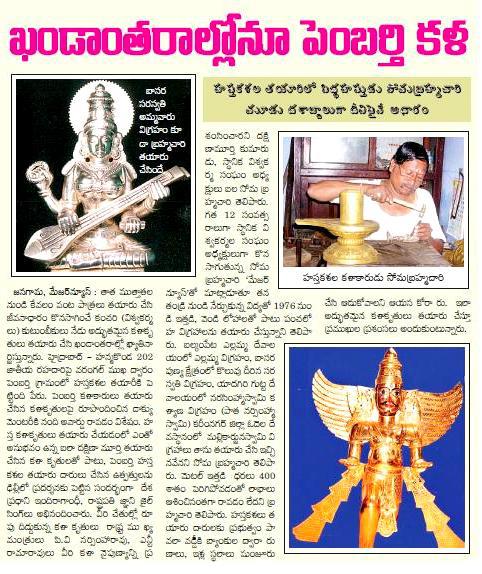
Pembarthy, a historic village in Telangana, is renowned for its centuries-old tradition of temple metal craftsmanship. Famous for creating intricate brass temple doors, Panchaloha idols, and sacred temple ornaments, Pembarthy artisans continue to preserve techniques passed down through generations. Rooted in spiritual discipline and traditional metallurgy, this craft reflects India’s rich artistic heritage and devotion to sacred art.
Hidden in the cultural landscape of Telangana lies Pembarthy, a small village that holds a remarkable place in India’s artistic and spiritual heritage. For centuries, this village has been known for its extraordinary temple metal craftsmanship. The magnificent brass temple doors, sacred idols, and intricate metal ornaments found in many South Indian temples often originate from the skilled hands of Pembarthy artisans.
Today, Pembarthy stands as a living symbol of devotion, tradition, and craftsmanship passed down through generations.
A Heritage Rooted in History
The artistic legacy of Pembarthy dates back hundreds of years and flourished during the rule of the Kakatiya dynasty and later royal patrons. During this period, temple architecture demanded highly refined metalwork that followed the sacred guidelines of Agama Shastras.
Pembarthy craftsmen mastered the complex blend of metallurgy, sacred geometry, and divine iconography required for temple art. One of their most celebrated creations is the grand temple doors, beautifully embossed with mythological scenes, sacred motifs, and symbolic patterns.
These doors were not simply architectural features; they were believed to represent a spiritual passage between the human world and the divine realm.
A Living Tradition of Temple Metal Craft
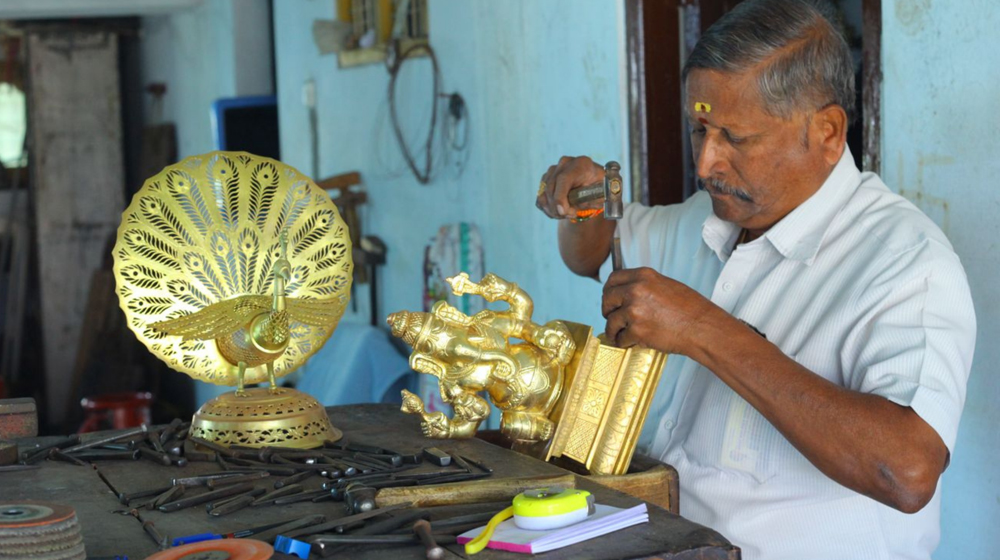
What makes Pembarthy truly unique is the way its artistic knowledge continues to survive across generations. The craft is not learned through formal schooling but through hands-on training within artisan families.
Each generation learns directly from elders, preserving techniques that have remained unchanged for centuries. Different families often specialize in different aspects of the craft such as:
- Metal casting
- Engraving and detailing
- Repoussé (embossing) work
- Surface finishing and polishing
This collaborative system allows artisans to produce exceptionally detailed temple metal works while maintaining traditional authenticity.
Many of the original techniques are still practiced today, including:
- Hand-hammering brass sheets
- Lost-wax casting methods
- Preparing natural metal alloys
- Manual embossing without modern machinery
Spiritual Precision Over Speed
For Pembarthy artisans, creating sacred metal art is not just a technical process—it is a spiritual discipline. Every idol, ornament, or temple component must follow precise proportions, gestures (mudras), and measurements prescribed in ancient scriptures.
Craftsmanship is guided by the principles of shuddhi (purity) and vidhi (scriptural correctness). Devotion, intention, and ritual discipline are considered just as important as artistic skill.
Because of this deep spiritual approach, Pembarthy metal works are highly respected for creating:
- Temple doors and Dwara Palaka panels
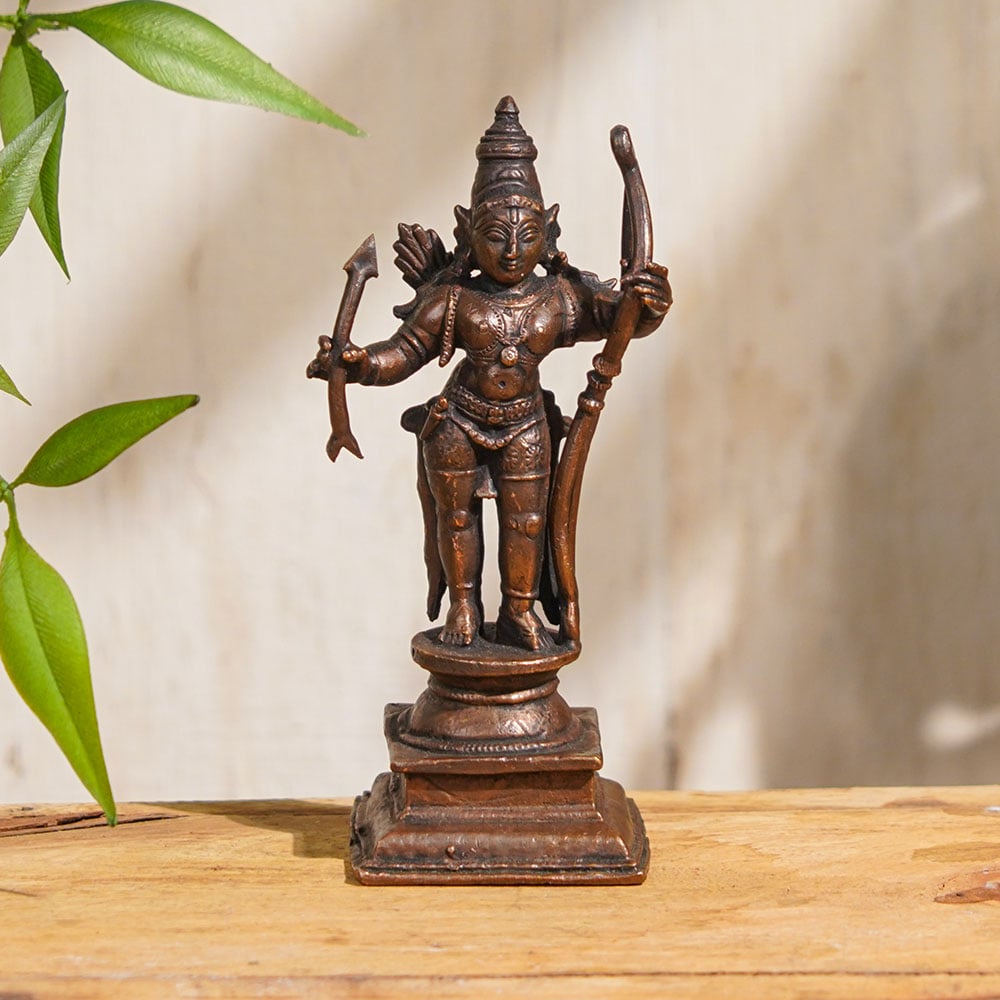
- Panchaloha and brass idols of deities
- Temple bells, lamps, and kalashams
- Sacred yantras and ritual accessories
Recognition Beyond the Village
Although Pembarthy is a small village, its artistic contributions have gained recognition across India and beyond. The traditional metal craft of Pembarthy has been awarded Geographical Indication (GI) status, acknowledging its cultural uniqueness and regional identity.
Today, Pembarthy creations can be found in:
- Prominent temples across India
- Heritage restoration projects
- Museums and cultural institutions
- Private and international collections
Despite this growing global appreciation, the artisans continue to work in modest workshops, remaining deeply connected to their ancestral traditions.
Generations of Artisans, One Shared Heritage
In Pembarthy, metal art is not merely a livelihood—it is a way of life. Children grow up surrounded by the sounds of hammering metal, the glow of molten alloys, and the guidance of experienced craftsmen.
The elders of the community serve as living repositories of knowledge, ensuring that traditional techniques and spiritual values continue to be passed down.
Every finished creation carries:
- Weeks or months of patient craftsmanship
- The legacy of generations of artisans
- A sacred purpose designed to last for centuries
Preserving a Timeless Craft
In today’s world of rapid industrial production, Pembarthy remains a powerful reminder that true craftsmanship cannot be rushed or mass-produced.
Supporting Pembarthy artisans means preserving a centuries-old cultural tradition—one that beautifully connects art, spirituality, and community.
Pembarthy is more than just a village.
It is a living testament to the enduring spirit of India’s sacred artistic heritage.